
What Is Artificial Intelligence? A Beginner’s Guide for 2026
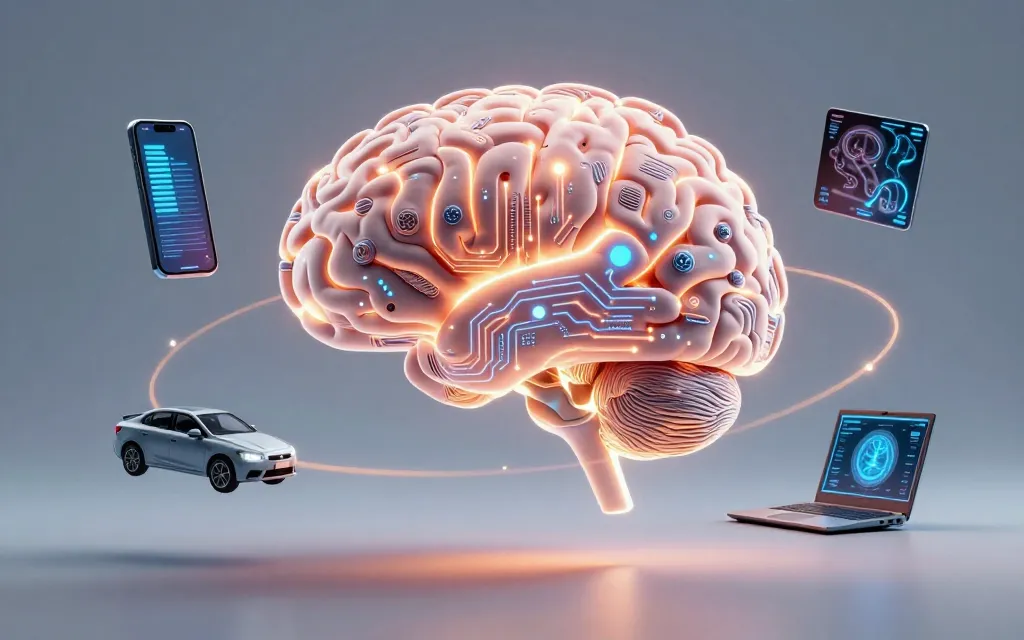
AI Artificial Intelligence, or AI, is a staple of modern life. It’s not science-fiction fodder or just research labs, at least by 2026. AI enables people to unlock their phones, recommends videos, filters spam emails, coordinates traffic before and after a flight takes off, guides your rideshare driver on the fastest route to pick you up and helps businesses make smarter decisions .For newcomers, this rapidly changing space can be bewildering. Terms are new one day, headlines sound dramatic and technology shifts overnight. The truth is simpler. This guide demystifies Artificial Intelligence in a relaxed, intuitive and practical manner so that anyone can understand what it is, how it works and why it matters today.
Grasping the Essence of AI
Among the first questions is what is artificial intelligence. Simply put, AI is the development of computer systems that are able to complete tasks we associate with human intelligence. These tasks include on the job learning, pattern identification, language comprehension as well as problem solving and decision making.
Classical computer programs have rules they follow. They will do precisely what they have been programmed to do. AI systems work differently. They train on data and get better over time. The more data they analyze, the better they get at predicting or recommending things.
In 2026, AI is not overwhelmingly for humans. It’s about boosting people, eliminating the drudgery of repeat tasks and facilitating more efficient handling of complex matters.
How AI Got to Where It Is Today
The concept of intelligent machines is not a new one. Early AI were based on rule sets and totally constrained. They worked great in controlled environments and they failed once the conditions changed.
AI gradually evolved as computing capability grew, and the sheer volume of data made it impossible to be ignored. Today’s systems can process enormous sets of data, identify nuances and patterns, and learn from outcomes. This change turned AI from a relatively simple automation tool to a high-powered decision support technology.
Today, AI development is also oriented to the responsible. Ethical design, transparency and fairness are fundamental to the development of systems that work for everyone and earn public trust.
How A.I. Works (This is in Simple Language)
AI is, at its heart, a simple procedure. First, it gathers data words, images, numbers or sensor readings. The second, is the pattern finding by algorithms in this data. Third, the system output could be a prediction, recommendation or an action.
The classic example is a music streaming service. It analyzes the music you listen to, learns your tastes and suggests fetching songs you might like. But every time it happens, the system gets better.
This learning process is related to that of machine learning. Machine learning is an important component of artificial intelligence that enables systems to learn through data without programming them specifically for each task.
AI in Everyday Life
AI already has some influence on the daily grind. Artificial intelligence Face recognition, voice assistants and photo enhancements are all aspects of smartphones which use AI. Email services depend on AI to identify spam and spotlight important messages.
It’s easier to see this when we look at applications of artificial intelligence examples. Apps that are used for navigation will estimate traffic and offer alternate, faster routes. You are shown product recommendations during online shopping. Apps from banks employ A.I. to identify strange activity and block fraud before it occurs.
These instruments do their work silently, in the background, and contributed to make life easier, simpler and safer.
Artificial Intelligence in Business and Industry
How businesses use AI to work smarter. AI systems in manufacturing watch over equipment and predict when maintenance is needed before something breaks down. In retail, AI is used to manage inventory and predict demand.
Healthcare has some of the most compelling AI use cases. Doctors are provided with support from AI enabling the analysis of medical images, identifying patterns in patient´s data, and contributing to timely diagnosis. These systems augment human capability, not replace it.
Marketing departments also use AI to better comprehend and act upon the behaviour of their clients by creating targeted content.
AI Era Education and Learning
With AI tools, education has transformed a lot. Online courses can adjust lessons to the way students are learning and progressing. That is how you make it more private.
Teachers benefit as well. Time-saving and personalized features such as automated grading, performance insights, and learning analytics help reinforce concepts for the students who need extra support.
Also, knowing what is machine learning helps students better understand how such tools evolve and get better over time. Here are a few reasons we believe learning about AI is important for students: Understanding how AI works equips us to be responsible and effective users of technology.
Ethical Dilemmas and Responsible AI
With the good comes some challenges for AI. 2026 is Data privacy, bias and transparency are topmost on everyone’s mind. As AI systems are trained on human created data, they can embody existing biases if not developed with caution.
Responsible AI in the age of fairness, accountability and trust. Governments, companies and researchers collaborate to set guidelines that safeguard users.
For newcomers, understanding what is artificial intelligence also involves learning the impacts that it has on society and not just how it works from a technical standpoint.
Careers And Skills In AI
AI has produced new types of jobs and redefined existing ones. Roles such as data analyst, AI engineer and machine learning specialist are increasingly in demand. Meanwhile, in numerous professions today, it’s a necessary to be familiar with the basics of AI.
You don’t always need mad coding skills to learn AI. The knowledge of data, problem solving and understanding how AI tools work has a lot of value across different industries. Supports a variety of hands on projects as well as online courses.
Why learn why: As technology advances, perpetual learning keeps people intellectually secure in an AI-run world.
What the Future Could Hold After 2026
And more broadly, of course, AI will increasingly be woven into all aspects of our lives as we move forward. Smart cities, sophisticated healthcare applications, intelligent transportation will see further development. Potential uses for artificial intelligence examples could include addressing global issues such as climate change and public health.
The creativity, empathy and judgment of human beings will always matter. Again, A.I. is most effective when it assists people instead of replacing them.
Final Thoughts
AI in 2026 is pragmatic, transparent and rooted to human experience. An Overview Fear and confusion vanish once the basics are known. AI is already very helpful, as real world examples attest.
Understanding what is artificial intelligence and machine learning certainly gets beginners started in technology with ease. With inquiry, accountability, and mindfulness we can all find our way through the AI defining future in a way that is significant and human.